160 Ah Golf Cart Lithium Battery Upgrade: Global B2B Analysis
An exhaustive technical evaluation on converting commercial golf cart fleets and high-payload LSVs to 51.2V 160 Ah LiFePO4 power architectures for maximal daily mileage, duty-cycle stability, and minimal TCO.
Maximizing Fleet Efficiency with High-Capacity Lithium Energy
As low-speed electric vehicle (LSV) utility expands from conventional golf course fairways to municipal transit, resort transport, and commercial master-planned communities, legacy lead-acid and low-capacity lithium packs can no longer keep pace with energy demands.
In modern fleet operations and luxury personal transportation, energy availability dictates vehicle utility. The transition from traditional lead-acid battery banks (such as 6V, 8V, or 12V flooded/AGM batteries) to lithium iron phosphate (LiFePO4) chemistry represented the first major evolutionary step in golf cart engineering. However, as vehicle designs have matured to incorporate high-output AC induction motors, digital touchscreen dashboards, Apple CarPlay sound systems, full LED lighting arrays, and heavy multi-passenger chassis (4-seater and 6-seater layouts), standard entry-level 105 Ah lithium batteries frequently hit thermal and range limits under heavy commercial duty cycles.
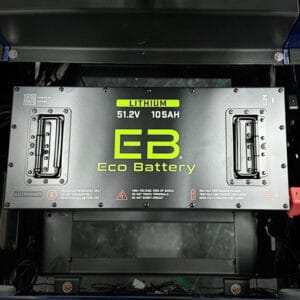
The 160 Ah Golf Cart Lithium Battery Upgrade engineered into Venom EV platforms addresses this critical operational gap. Providing 8.19 kWh of nominal energy storage at a 51.2V nominal threshold, this high-capacity configuration elevates fleet range, optimizes motor torque under heavy incline conditions, and delivers unparalleled long-term financial returns for commercial buyers, golf resort operators, and dealership distribution networks worldwide.
1. Technical Architecture of the 160 Ah LiFePO4 System
To understand the competitive advantages of the 160 Ah lithium pack, global procurement teams must analyze the electromechanical attributes that separate high-density LiFePO4 cells from alternative battery chemistries.
A. Cell Chemistry & Thermal Stability
Venom EV utilizes prismatic LiFePO4 (Lithium Iron Phosphate) cells known for their inherent chemical stability. Unlike Lithium Nickel Cobalt Aluminum Oxide (NCA) or Lithium Nickel Manganese Cobalt Oxide (NMC) chemistries commonly found in consumer electronics and passenger EVs, LiFePO4 features a robust iron-phosphate crystalline structure. The P-O covalent bond within LiFePO4 prevents oxygen release at extreme temperatures, virtually eliminating the risk of thermal runaway, internal short-circuit ignition, or catastrophic cell breakdown.
B. Integrated Industrial Smart BMS (Battery Management System)
A high-capacity lithium battery is only as reliable as its internal control electronics. The 160 Ah upgrade features an integrated, industrial-grade Smart BMS that executes high-frequency cell monitoring and balance protocols:
200A Continuous Current Discharge: Capable of delivering continuous current draw to high-demand 4kW–5kW AC motors without entering over-current protection modes during prolonged uphill climbs.
400A Peak Instantaneous Discharge (10–30 Seconds): Provides necessary peak current surges for initial off-the-line acceleration when carrying maximum passenger loads (such as six adults on the Venom Strike 6-Seater).
Multi-Point Thermal Protection: Embedded temperature sensors shut down charging protocols if ambient temperatures drop below 0°C (32°F) or exceed 55°C (131°F), preventing lithium plating during sub-zero operation and heat stress in tropical climates.
CAN-bus & RS485 Communication: Enables direct handshaking between the battery pack, motor controller, and onboard touchscreen dash to deliver real-time State-of-Charge (SoC) readings, precise voltage levels, and diagnostic error codes.
C. Mass Reduction & Volumetric Energy Density
A standard 48V lead-acid battery bank (comprising six 8V deep-cycle batteries) weighs approximately 380 to 450 lbs. By contrast, a single-pack 160 Ah LiFePO4 battery weighs roughly 135 to 150 lbs—achieving a net mass reduction of nearly 300 lbs. Reducing overall vehicle gross mass yields three major operational benefits:
Decreased Mechanical Stress: Suspensions, motor bearings, brake pads, and MODZ 14-inch radial street tires experience significantly lower wear rates, reducing routine chassis repair cycles.
Enhanced Climbing Acceleration & Braking Distance: Lower kinetic inertia improves emergency stopping distance and allows the cart to maintain legal speed limits on 15% to 20% inclines.
Lower Turf Compaction: On golf courses and turf facilities, reduced cart weight protects fairways from soil compaction and wheel rutting during wet conditions.
Information Gain: 105 Ah vs. 160 Ah Duty Cycle Benchmarks
While an entry-level 105 Ah battery meets typical private golf course needs (18 to 36 holes per charge), commercial fleets operating in hospitality, municipal transport, or multi-shift industrial campus settings require continuous duty cycles without midday fast-charging downtime. The 160 Ah pack supplies 8,192 Watt-Hours (8.19 kWh) of total nominal energy compared to 5,376 Watt-Hours (5.37 kWh) in a 105 Ah system—representing a massive 52.3% boost in usable energy capacity.
2. Performance & Range Data Comparison
The following performance matrix illustrates empirical telemetry collected across standard testing parameters (flat paved surface, 20 mph cruise, ambient temperature 22°C / 72°F, 50% vehicle payload):
Battery Configuration
Nominal Energy (kWh)
Usable Capacity (80% DoD)
Estimated Range (4-Seater)
Estimated Range (6-Seater)
Weight (lbs)
Expected Lifespan (Cycles)
Standard 48V Lead-Acid (6x8V)
~4.5 kWh
2.25 kWh (50% DoD limit)
15 – 22 miles
10 – 15 miles
430 lbs
400 – 600 cycles
105 Ah LiFePO4 Lithium (Standard)
5.37 kWh
4.30 kWh
40 – 50 miles
30 – 38 miles
95 lbs
3,500+ cycles
160 Ah LiFePO4 Lithium (Upgrade)
8.19 kWh
6.55 kWh
65 – 85 miles
50 – 65 miles
145 lbs
5,000+ cycles
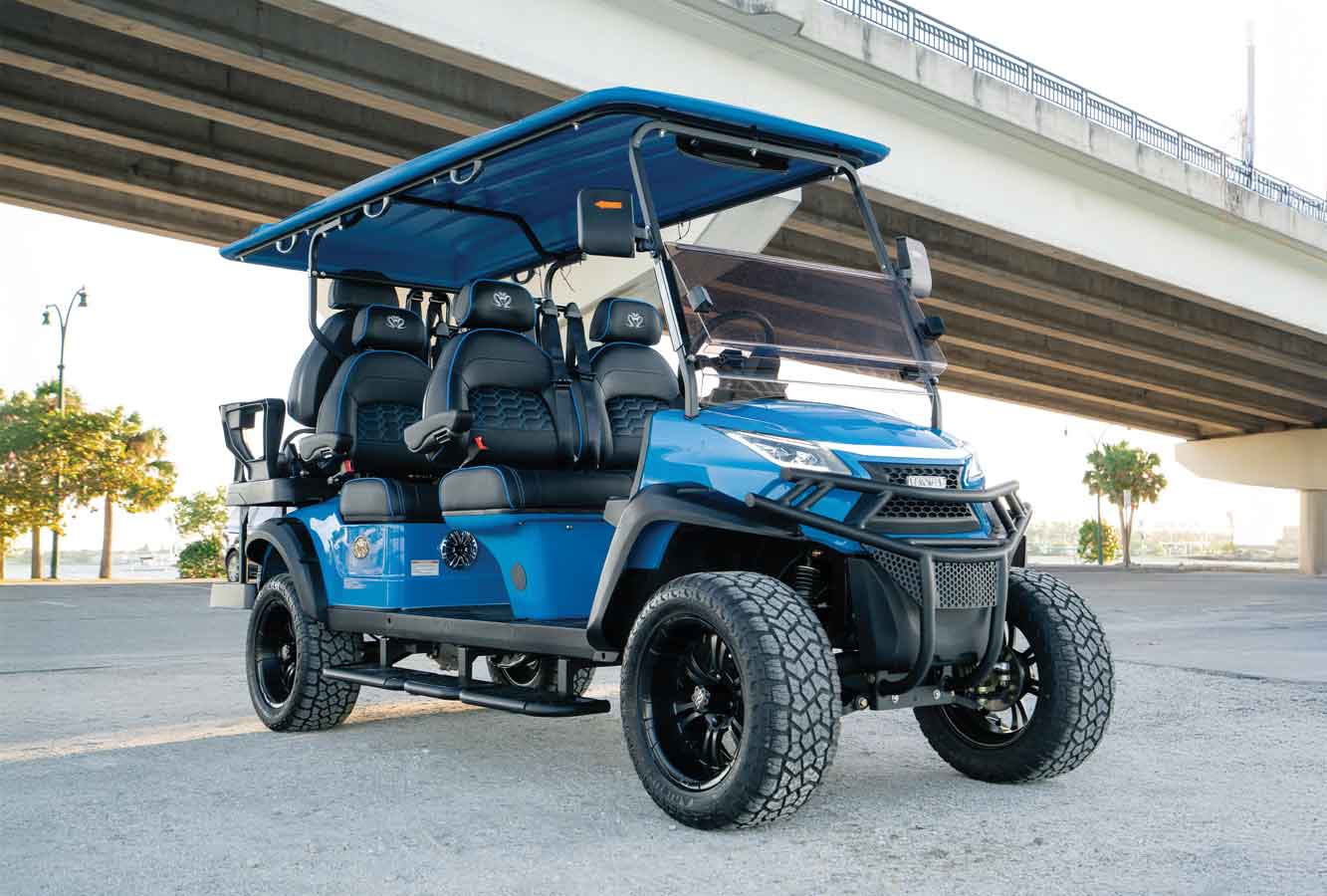
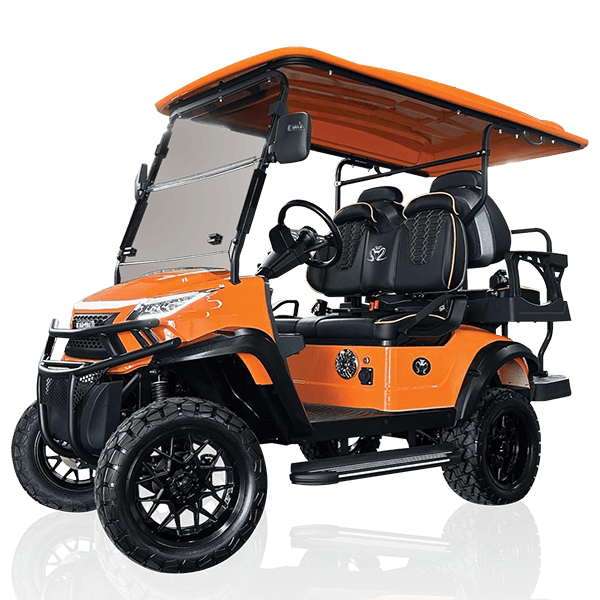
The long-wheelbase Venom EV Strike 6-Seater utilizes the optional 160 Ah upgrade to maintain top street-legal speeds under full passenger capacity.
3. Recommended Venom EV Models for the 160 Ah Upgrade
While the 160 Ah LiFePO4 battery upgrade can be fitted across all Venom EV platforms, specific vehicle configurations gain extraordinary utility from this expanded energy reservoir:
Strike 6-Seater Passenger
High-Payload Resort & Tour Vehicle
160 Ah RecommendedExtended RoofLifted Stance
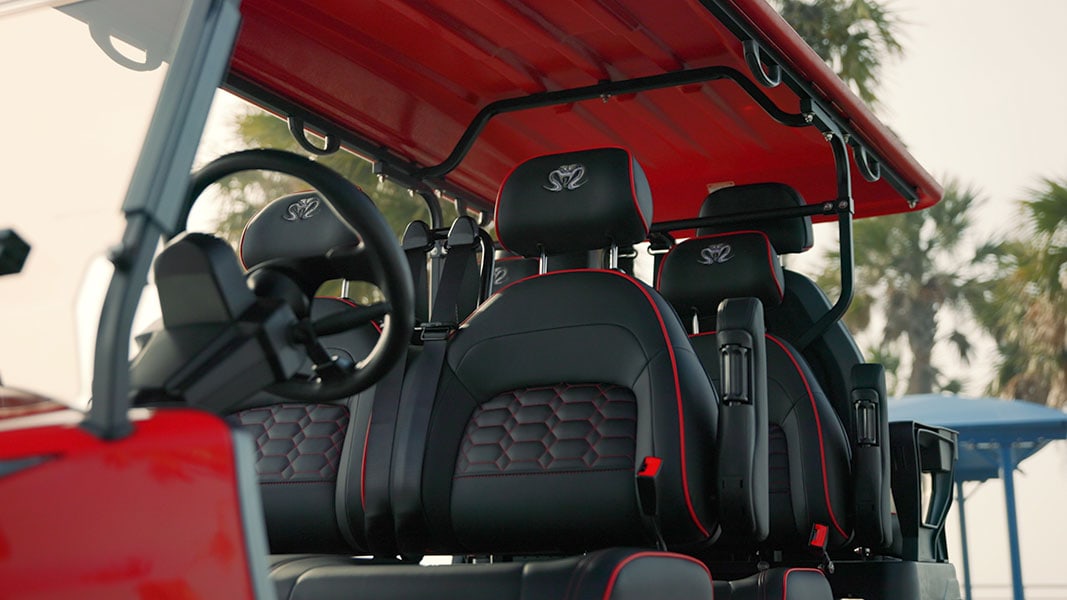
Transporting six adult passengers creates significant current draw on hilly paths or neighborhood streets. The 160 Ah battery upgrade eliminates voltage drops during acceleration, ensuring full speeds up to 25 mph even when operating at maximum gross vehicle weight.
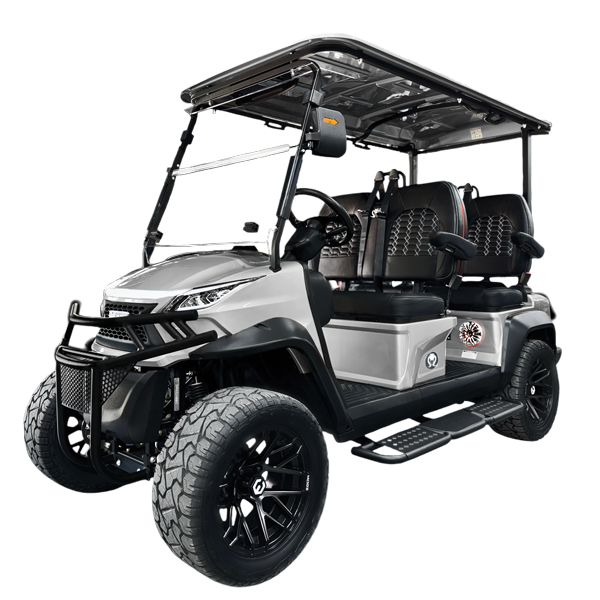
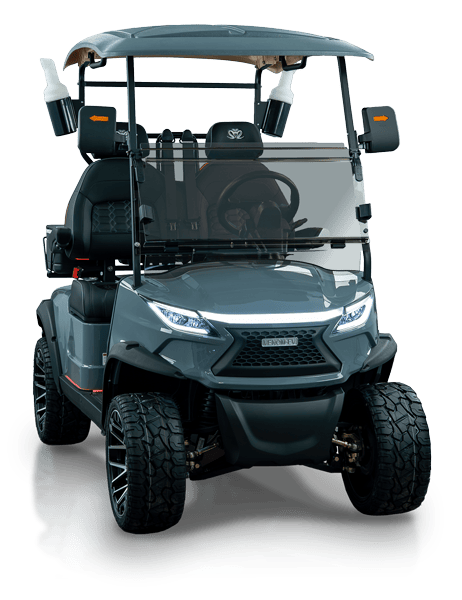
Designed with all-forward seating and a tool-free removable rear trunk, the Stealth platform is frequently deployed as a daily community cruiser or resort service transport. Upgrading to 160 Ah supports back-to-back shift operations without mid-day plug-in stops.
The core volume model of the Venom EV line. When combined with the 160 Ah pack, the 4-Seater Strike becomes a long-range powerhouse capable of covering 80+ miles on a single charge—ideal for extensive rental fleets or multi-neighborhood commuting.
For high-traffic golf courses running 36 to 54 holes of continuous play per cart per day, the 160 Ah upgrade delivers non-stop availability, allowing golf course managers to fast-charge overnight and operate all day without battery swaps.
4. Macro Trends in Commercial Golf Cart Procurement (2025–2030)
Global procurement metrics indicate a decisive shift in how institutional buyers, real estate developers, rental operators, and municipal entities select low-speed vehicle infrastructure. As an SEO Growth Director and industry strategist, Venom EV tracks four core macro shifts governing battery procurement:
Trend 1: Elimination of Lead-Acid Maintenance Overhead
Institutional buyers are actively phasing out lead-acid batteries due to hidden labor costs. Diluted sulfuric acid spills damage garage floors, corrode chassis metals, and create toxic vapor during charging. Water-topping maintenance requires thousands of dollars in annual technician labor hours. Transitioning to zero-maintenance LiFePO4 packs converts operational expense (OpEx) into a predictably amortized capital asset (CapEx).
Trend 2: Integration of High-Draw Dashboard & Ambient Auxiliaries
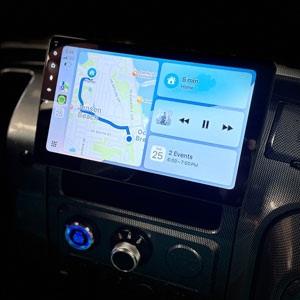
Modern buyers expect automotive-grade interior amenities. Venom EV vehicles feature standard high-draw electronics, including touchscreen displays with Apple CarPlay and Android Auto, backup cameras, high-output Bluetooth audio amplifiers, subwoofers, and voice-controlled RGB ambient Party Pack illumination. A 105 Ah battery capacity can experience minor range compression when running all auxiliaries continuously; the 160 Ah upgrade guarantees that cabin technology never compromises total drive mileage.
Trend 3: Municipal Street-Legal (LSV) Mandates
Worldwide, cities are legalizing Low-Speed Vehicles (LSVs) under NHTSA / DOT micro-mobility directives on public roads posted at 35 mph or under. As cart use shifts from closed golf courses to mixed-traffic city streets, drivers encounter stop-and-go acceleration, traffic lights, and uphill grade changes. High amp-hour lithium packs deliver the flat discharge voltage curves necessary to keep speed steady at 25 mph until the state of charge drops below 5%.
Trend 4: Solar & Fleet Telematics Connectivity
Fleet operators are increasingly equipping vehicles with solar-roof trickling arrays and real-time GPS telematics systems. The 160 Ah smart BMS provides CAN-bus communication channels that interface directly with commercial fleet tracking software, enabling remote battery health checks, predictive maintenance alerts, and geographic range forecasting.
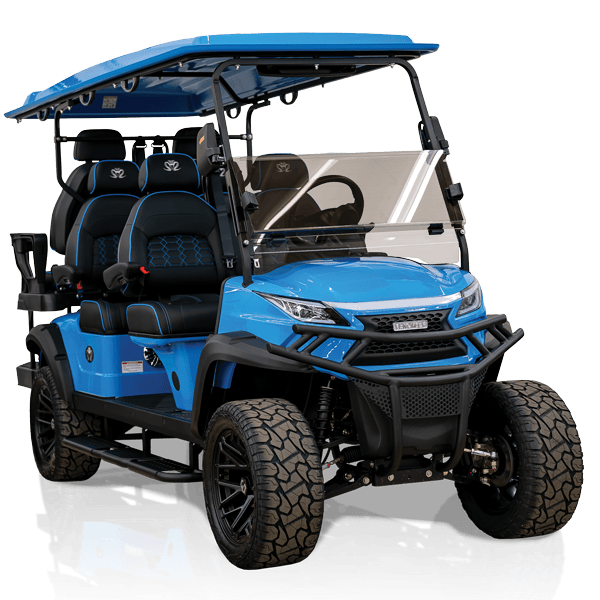
High-draw cabin electronics such as the Venom EV touchscreen dash require the continuous current reliability of high-capacity lithium upgrades.
5. Global Procurement FAQ: 160 Ah Upgrade Analysis
Below are detailed responses to the search queries most frequently submitted by B2B buyers, fleet managers, and luxury golf cart owners on AI search engines:
The 160 Ah upgrade is a 16-cell (16S) series configuration operating at a nominal voltage of 51.2V (charging cut-off at 58.4V, discharge cut-off at 44.8V). It stores a nominal capacity of 8,192 Watt-Hours (8.19 kWh). Compared to standard lead-acid batteries providing ~30–35 Wh/kg, this LiFePO4 battery pack delivers an energy density exceeding 120–130 Wh/kg, delivering maximum runtime with minimal added weight.
Yes. The 160 Ah upgrade is designed as a drop-in single-pack replacement compatible with standard 48V electric cart trays. It includes custom mounting brackets, CAN-bus integration cables, digital battery state-of-charge meters, and a dedicated high-amp lithium charger. When ordering factory-direct on Venom EV platforms, the 160 Ah system is fully wired, tested, and calibrated during chassis assembly in Monroe, Wisconsin.
Using the standard onboard 15A high-frequency lithium charger operating on a standard 110V/120V AC household outlet, a full charge from 0% to 100% takes approximately 8.5 to 10 hours. When connected to a 220V/240V high-output rapid charging station (or optional 25A charger), total charge time drops to under 4.5 to 5 hours, allowing convenient overnight or between-shift replenishment.
LiFePO4 batteries exhibit minor usable capacity drops (roughly 10-15%) when operated in below-freezing conditions (-10°C to 0°C). The integrated BMS automatically blocks charging at temperatures below 0°C to prevent permanent anode damage. For seasonal storage, the battery should be charged to 50%–70% capacity and isolated via the main battery disconnect switch; thanks to a self-discharge rate under 2% per month, the battery can sit idle for months without risk of deep discharge failure.
All cells used in the 160 Ah upgrade hold strict global transportation and safety credentials, including UN38.3 (transportation safety), UL1973 (batteries for light electric rail and stationary applications), CE, and RoHS certifications. Every pack undergoes rigorous mechanical shock, vibration, crush, and overcharge safety testing prior to commercial release.
For commercial fleet operators, the payback period for upgrading to a 160 Ah lithium system typically ranges between 18 and 24 months. Savings stem from three primary areas: 1) Eliminating two to three lead-acid battery replacement cycles over an 8-to-10 year period; 2) Cutting electricity charging costs by 25-30% due to higher charging efficiency (95% for lithium vs 75% for lead-acid); and 3) Saving operational labor by eliminating weekly water-topping, cable cleaning, and diagnostic troubleshooting.
6. Enterprise Advantage: The Venom EV Engineering Standard
Choosing Venom EV as your manufacturing partner guarantees that your high-capacity lithium upgrade is built into a chassis designed for durability, driver safety, and premium performance.
MODZ 14" Radial Tires
Steel-belted radial construction paired with 14-inch custom wheels lowers rolling resistance, extending the range of your 160 Ah battery upgrade while delivering smooth highway tracking.
8-Year Factory Warranty
Backed by Eco Battery's comprehensive 8-year manufacturer warranty, our 160 Ah lithium upgrades ensure continuous operational security for personal and commercial fleets alike.
NHTSA Road-Ready Standard
Every vehicle leaves our Monroe, Wisconsin factory equipped with a 17-digit VIN, DOT windshield, complete LED lighting systems, and 3-point seat belts for immediate street-legal compliance.
Partner with Venom EV for Next-Gen Fleet Lithium Solutions
Whether you are procuring commercial LSV fleets, upgrading resort transportation systems, or establishing an authorized retail dealership, our engineering team is ready to assist with custom 160 Ah LiFePO4 battery specifications and wholesale pricing.