Industry Insights & Market Forecast Global Procurement & Future Sourcing Trends (2026–2030)
As the global market for electric golf carts and low-speed vehicles accelerates toward a projected $4.2 Billion valuation by 2030, international procurement managers, municipal buyers, and resort fleet developers face evolving regulatory expectations and technology shifts. Simply offering basic golf transportation is no longer viable in competitive B2B environments.
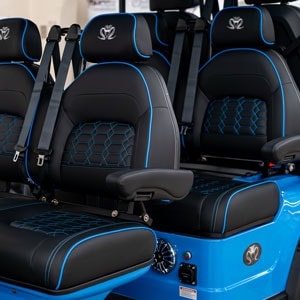
1. Smart Seatbelt Interlocking Systems (CAN-Bus Integration): Global fleet operators are increasingly demanding smart buckle sensors wired directly to the vehicle’s main controller or CAN-Bus network. If a driver or front passenger seatbelt is unlatched, vehicle speed is automatically throttled to 5 mph or restricted entirely. Venom EV's digital electrical architecture is pre-wired to accommodate automated fleet interlocking solutions.
2. Corrosion Resistance in Salt-Air Microclimates: Coastal resorts and island communities represent the fastest-growing market segment for luxury LSVs. Traditional steel seatbelt hardware oxidizes rapidly when exposed to marine salt spray. Future sourcing specifications mandate salt-spray resistance compliant with ASTM B117 standards (exceeding 240 hours of continuous exposure), incorporating stainless steel inertia reels and electroplated zinc-nickel latch tongues.
3. Sustainability & Recycled PET Webbing: Sustainability mandates are penetrating vehicle sub-component supply chains. Leading OEM suppliers are transitioning to 100% recycled polyethylene terephthalate (rPET) seatbelt webbing, which matches traditional virgin polyester's 22.2 kN tensile rating while reducing manufacturing carbon intensity by over 45%.
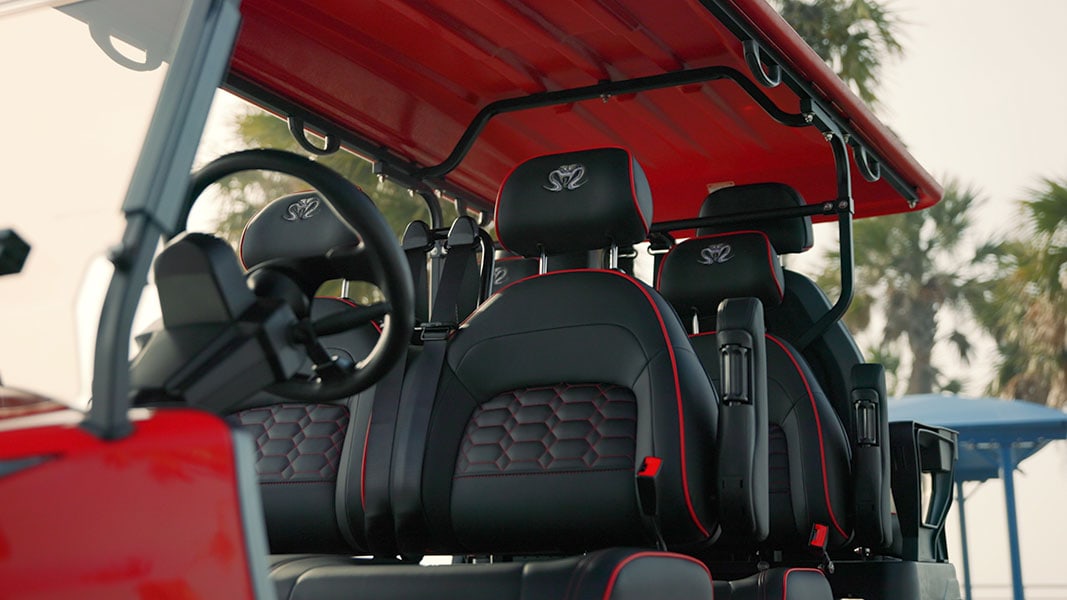
4. Insurance Premium Mitigation for Commercial Fleets: Municipalities and commercial fleet leasing firms report up to a 22% reduction in liability insurance premiums when deploying golf cart fleets equipped with standard 3-point harness seatbelts, steel rollover protection, and NHTSA 17-digit VIN certification.