0%

Choosing the best Luxury Electric Golf Carts for sale in China requires more than admiring polished paint and premium seats. Buyers should examine battery chemistry, motor output, charging time, suspension design, braking performance, and after-sales support. A quiet ride feels impressive, but dependable engineering matters more after months of daily use.

Kevin Holleran, President of Textron Specialized Vehicles, which includes E-Z-GO, has stated, “Our goal is to deliver innovative products that help people move better, work smarter and play more.” That principle applies well to China’s expanding luxury cart market. The strongest models combine refined styling with practical performance. Think stitched seats, automotive-grade lighting, weather-resistant controls, and smooth acceleration on uneven paths.

Yet luxury does not always mean perfect. Some attractive carts offer limited service coverage or unclear battery warranties. That deserves attention. Buyers should compare factory specifications with real operating conditions, including hills, passenger loads, climate, and charging access. A lithium battery may reduce weight and maintenance, but its value depends on quality management systems and replacement support.

This guide explores China’s leading Luxury Electric Golf Carts for sale, focusing on construction quality, customization, comfort, range, safety features, and supplier credibility. It also considers a less glamorous question: how well will the cart perform after the showroom shine fades? That answer often separates a beautiful purchase from a reliable long-term investment.
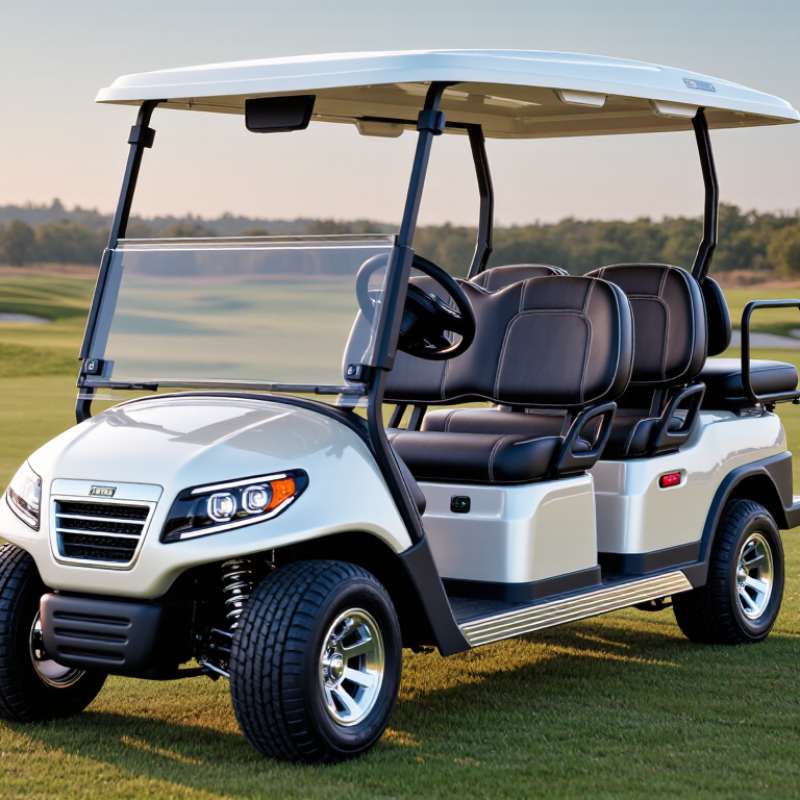
China Best Luxury Electric Golf Carts for Sale

China’s Luxury Electric Golf Carts: Types, Uses, and Market Position

China Best Luxury Electric Golf Carts for Sale

China’s Luxury Electric Golf Carts: Types, Uses, and Market Position

China’s luxury electric golf carts serve more than traditional golf courses. Common types include two-seat models, four-seat touring carts, and extended six-seat shuttles. Some feature enclosed cabins, quiet suspension systems, LED lighting, and weather-resistant upholstery. The details matter. A cart with soft seats may still perform poorly on uneven pavement.

Resorts use these vehicles for guest transfers, while residential communities use them for short daily trips. Farms, campuses, hotels, and event venues also value their low noise and compact turning radius. Buyers should verify battery chemistry, charging time, payload limits, braking performance, and local road eligibility. Real performance depends on load, gradients, temperature, and maintenance quality.

China’s market position reflects flexible manufacturing, broad component sourcing, and practical customization. Export buyers can often request different seating layouts, storage spaces, colors, and cabin designs. However, luxury styling does not guarantee dependable engineering. A reliable evaluation should include test data, warranty terms, spare-parts access, and service response times. Independent pre-shipment inspection can reveal weak welds, uneven panel gaps, or inconsistent assembly. That mistake is expensive. The market is competitive, but quality still varies between suppliers.

China’s Luxury Electric Golf Carts: Types, Uses, and Market Position

The chart shows indicative driving ranges per charge for common luxury electric golf cart configurations sold in China. Two-seat carts are widely used in private communities and resorts, while four- to eight-seat models are more suitable for hotels, golf clubs, tourism facilities, campuses, and large residential developments. The figures represent typical market specifications rather than data from any individual company or brand.

Core Specifications: 48–72 V Platforms, 4–8 kW Motors, and 25–40 km/h Speeds

China Best Luxury Electric Golf Carts for Sale

Luxury electric golf carts now combine refined comfort with practical performance. Most premium models use 48–72 V electrical platforms, supporting stable operation across private courses, resorts, and large properties. A 48 V system may suit short routes and moderate loads. Higher-voltage platforms can deliver stronger hill performance when correctly matched with the battery and controller.

Motor output commonly ranges from 4–8 kW. This range affects acceleration, climbing ability, and energy use. A 4 kW motor feels controlled on level paths, while an 8 kW setup offers more confidence with passengers or uneven ground. Claimed speeds usually fall between 25 and 40 km/h. Actual results depend on total weight, tire pressure, battery condition, slope, and surface quality. That difference matters.

Look closely at battery capacity, charging time, braking response, and suspension travel. A well-built cart should remain composed when carrying four passengers, not only when displayed empty. Test it loaded. Listen for drivetrain noise over rough pavement, and check whether the steering returns smoothly after a turn. Some specifications look impressive on paper but feel less convincing in daily use. Confirm available safety equipment and local operating requirements before purchase, especially when higher speeds are involved. Reliable sellers should provide clear electrical data, warranty terms, inspection records, and realistic range estimates rather than vague performance promises.

Battery Options: 5–15 kWh Packs, Lithium-Ion Chemistry, and 1,000+ Cycles

When comparing luxury electric golf carts for sale, battery capacity deserves more attention than polished seats or lighting. A 5 kWh lithium-ion pack suits short private-course trips and light neighborhood use. A 10 kWh pack offers more working margin for hills, passengers, and repeated rounds. The 15 kWh option supports heavier daily use, but adds weight, cost, and charging demand. Capacity is not range.

Real range changes with payload, tire pressure, gradients, temperature, and driving speed. In practical inspections, carts with similar packs can produce noticeably different results. That is the uncomfortable part. A seller’s range figure may reflect ideal conditions. Ask how it was measured and whether the estimate includes reserve capacity. Lithium-ion chemistry usually provides steady voltage, lower maintenance, and useful energy density. It still needs protection.

A quality battery-management system should monitor temperature, voltage, and cell balance. Charging equipment must match the pack’s chemistry and voltage. With proper charging and moderate discharge, many lithium-ion packs are rated for 1,000 or more cycles. That figure is not a promise. Heat, deep discharge, long storage, and neglect can shorten service life. Compare usable kWh, warranty terms, charger compatibility, replacement cost, and service records. A smaller pack may suit a flat course, while a larger pack can support frequent, hilly use. I would leave room for doubt. Battery estimates remain imperfect.

China Best Luxury Electric Golf Carts for Sale - Battery Options: 5–15 kWh Packs, Lithium-Ion Chemistry, and 1,000+ Cycles
Battery Configuration Nominal Voltage Rated Capacity Usable Energy* Typical Cart Application Estimated Practical Range** Typical Recharge Time*** Cycle-Life Rating
Compact lithium-ion pack 48 V 105 Ah Approximately 5.0 kWh nominal Light-duty two-seat cart, private estate, short leisure trips Approximately 30–45 km About 4–7 hours with a 1.0–1.5 kW charger 1,000+ cycles under specified operating conditions
Standard lithium-ion pack 48 V 150 Ah Approximately 7.2 kWh nominal Two- to four-seat cart for resorts, communities, and mixed terrain Approximately 45–65 km About 5–8 hours with a 1.5 kW charger 1,000+ cycles under specified operating conditions
Extended-range lithium-ion pack 51.2 V 200 Ah Approximately 10.2 kWh nominal Four-seat luxury cart, longer resort routes, moderate inclines Approximately 60–85 km About 6–9 hours with a 1.5–2.0 kW charger 1,000+ cycles under specified operating conditions
High-capacity lithium-ion pack 51.2 V 250 Ah Approximately 12.8 kWh nominal Four- to six-seat cart, frequent passenger use, hilly routes Approximately 75–105 km About 7–10 hours with a 2.0 kW charger 1,000+ cycles under specified operating conditions
Premium long-range lithium-ion pack 51.2 V 300 Ah Approximately 15.4 kWh nominal Six-seat luxury cart, commercial resort operation, extended daily duty Approximately 90–125 km About 8–12 hours with a 2.0–3.0 kW charger 1,000+ cycles under specified operating conditions
Technical note: Lithium-ion packs commonly use lithium iron phosphate (LiFePO₄) cells because of their strong thermal stability and long service life. Actual range depends on passenger load, speed, tire pressure, terrain, temperature, driving style, vehicle efficiency, and battery-management-system settings.
* Usable energy is lower than nominal energy because the battery-management system normally reserves operating limits to protect the cells. ** Range figures are practical planning estimates rather than guaranteed test results. *** Charging times vary with charger output, battery state of charge, temperature, and charging efficiency. Cycle life refers to the number of complete-equivalent charge cycles before capacity falls to the manufacturer’s specified end-of-life threshold; partial cycles accumulate proportionally.

Safety Compliance: ANSI/ITSDF B56.8 Standards for Golf Cars and Carriers

When shopping for luxury electric golf carts for sale, appearance should never lead the safety decision. ANSI/ITSDF B56.8 provides a recognized framework for golf cars and carriers. It addresses important design, construction, inspection, and operating considerations. A compliant-looking vehicle is not automatically compliant. Request conformity documents, model specifications, warning labels, and maintenance records before paying.

In a careful inspection, check steering response, service brakes, parking brakes, tires, mirrors, lights, seat security, and battery mounting. The controls should work without hesitation. Guards and handholds must remain secure, especially on uneven pavement. A clear identification plate can connect the vehicle with its technical records. Ask whether testing covers the complete vehicle, rather than separate components alone. Details matter.

Compliance also depends on actual use. A vehicle suited to private pathways may not suit public roads, steep slopes, or frequent passenger transport. Follow operating instructions, site rules, and driver training requirements. Do not treat a polished cabin as proof of engineering quality. Buyers can focus on upholstery and range, then overlook braking distance. That mistake is easy to make. No checklist catches everything. Paperwork may also be incomplete or outdated, so an independent inspection can expose concerns before delivery. Compare measured performance with stated specifications, and record unresolved questions in writing.

Buying Evaluation: 50–100 km Range, Warranty Coverage, and Total Ownership Cost

China Best Luxury Electric Golf Carts for Sale

A 50–100 km claimed range sounds attractive, but testing conditions matter. A level course, light load, and mild weather can produce optimistic results. Ask for range data under passenger weight, hills, and repeated stops. A practical test should include two adults, a full battery, and several inclines. Check the battery gauge after each trip. It should not drop sharply.

Warranty coverage deserves careful reading. Confirm the battery term, motor coverage, charger protection, and labor responsibility. Some warranties cover parts but exclude transport or installation costs. Request written details before payment. Also ask who handles diagnostics and replacement shipping. A responsive service contact is valuable when a cart stops far from the showroom.

Total ownership cost goes beyond the purchase price. Include freight, assembly, registration fees, insurance, tires, brake service, and electricity. Battery replacement may become the largest expense. Lithium systems often reduce routine maintenance, but their initial cost can be higher. Lead-acid systems may cost less upfront and require more frequent care. I would keep a one-year maintenance estimate beside the sales quotation. Luxury finishes can also increase repair costs. A polished dashboard is appealing, yet it does not improve hill performance. That distinction is easy to miss.

FAQS

How much battery capacity is suitable for an electric golf cart?

A 5 kWh pack suits short trips and light neighborhood use. A 10 kWh pack offers more margin for hills and passengers. A 15 kWh pack supports heavier daily use. More capacity also means more weight, cost, and charging demand.

Does battery capacity guarantee driving range?

No. Capacity is not range. Payload, tire pressure, hills, temperature, and speed can change results. Two carts with similar batteries may travel different distances. The estimate may be optimistic.

What should I ask about a claimed 50–100 km range?

Ask how the range was measured. Check whether testing included two adults, hills, repeated stops, and reserve capacity. Drive a practical route and inspect the battery gauge afterward. A sharp drop deserves attention.

How long can a lithium-ion battery last?

Many lithium-ion packs are rated for 1,000 or more cycles. That figure is not a promise. Heat, deep discharge, poor storage, and neglected charging can shorten service life. Real conditions matter more.

What battery-management features are important?

The system should monitor temperature, voltage, and cell balance. Charging equipment must match the battery chemistry and voltage. Ask for charger compatibility details before payment. Small mistakes can become expensive.

Which safety areas should I inspect before buying?

Test steering, service brakes, parking brakes, tires, mirrors, and lights. Check seat security, battery mounting, guards, and handholds. Controls should respond without hesitation. Do not judge safety by upholstery.

What documents should I request?

Request conformity documents, model specifications, warning labels, and maintenance records. Check the identification plate against the technical paperwork. Ask whether testing covered the complete vehicle. Paperwork may be incomplete.

What should a warranty cover?

Confirm coverage for the battery, motor, charger, labor, diagnostics, and replacement shipping. Some warranties exclude transport or installation costs. Request the terms in writing before payment. A helpful service contact matters.

What costs should I include beyond the purchase price?

Include freight, assembly, registration, insurance, electricity, tires, and brake service. Estimate battery replacement separately. A one-year maintenance budget gives a clearer picture. Luxury finishes may increase repair costs.

Is a larger battery always the better choice?

Not necessarily. A smaller pack may suit flat courses and occasional trips. A larger pack helps with frequent hills, passengers, and daily use. I would leave room for doubt.

Conclusion

Luxury Electric Golf Carts are becoming a versatile choice for golf courses, private communities, resorts, commercial properties, and recreational use. Designed to combine comfort, refined styling, and practical performance, these vehicles commonly use 48–72 V electrical platforms, 4–8 kW motors, and top speeds of approximately 25–40 km/h. Their market position is supported by flexible seating, quiet operation, and useful features such as upgraded suspension, lighting, storage, and weather protection.

Battery selection is a key purchasing consideration. Lithium-ion packs ranging from 5–15 kWh can provide efficient operation, with many systems rated for more than 1,000 charge cycles when properly maintained. Buyers should also review safety compliance with ANSI/ITSDF B56.8 standards for golf cars and carriers, along with a practical range target of 50–100 km. Warranty coverage, charging requirements, service support, replacement parts, and total ownership cost should all be evaluated to ensure the vehicle delivers reliable long-term value.

Evelyn

Evelyn

Evelyn is a highly skilled marketing professional with a deep understanding of the company’s products, customers, and evolving industry landscape. With a strong ability to translate technical features into clear, practical value, Evelyn creates informative content that helps readers make confident......