Golf carts are expected to carry more than passengers. A round may call for towels, rain gear, tools, or a small cooler, while a community ride may need room for groceries. A Golf Cart Removable Rear Trunk Attachment can add enclosed storage without requiring a permanent body change. That matters when owners want flexibility. Fit still comes first.
The National Golf Foundation’s 2024 Golf Participation Report counted 26.6 million on-course golfers in the United States during 2023. That figure signals a substantial user base, but it does not measure demand for rear trunks or prove that one design suits every cart. A useful buying comparison should therefore focus on practical details: model compatibility, mounting points, usable capacity, material, drainage, and access to existing seats or lights. Check the dimensions carefully. A box that looks roomy in a product photo may interfere with a seatback or rear-facing passengers.
For buyers browsing removable rear trunk attachments for sale, installation and daily handling deserve equal attention. Look for clear fitting instructions, realistic load guidance, and replacement-part support from the seller. Ask whether removal requires tools; product descriptions do not always make that clear. That is easy to miss. Industry participation data provides context, not a shortcut to choosing hardware. The right attachment depends on the cart, the cargo, and how often owners need to remove it. A little measurement before purchase can prevent an awkward fit later.
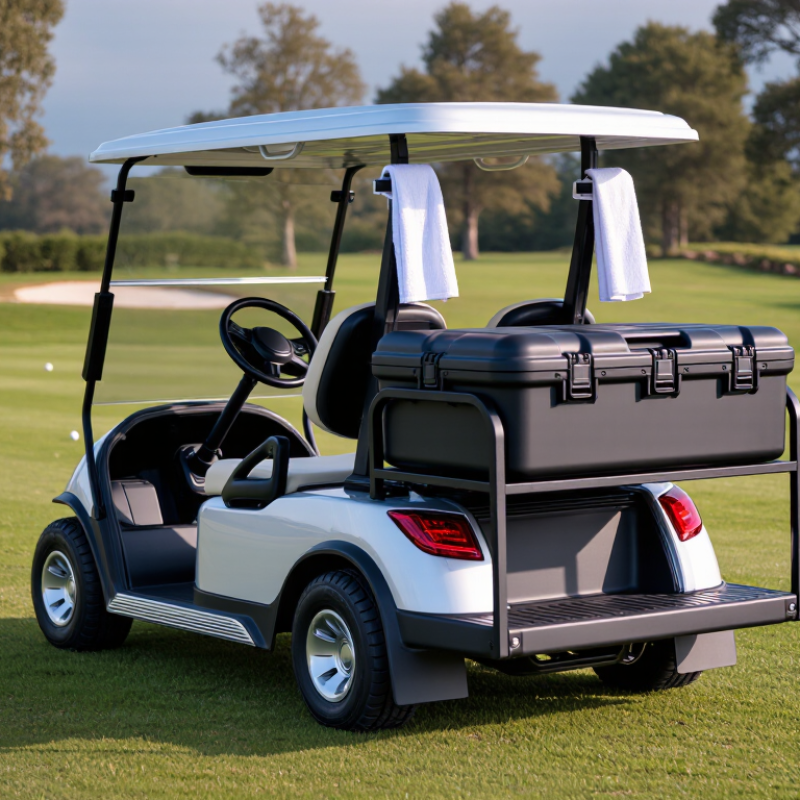
Removable rear trunk attachments are cargo boxes, baskets, or enclosed containers fitted to the back of a golf cart. They connect through brackets, clamps, or existing mounting points, then come off when extra storage is no longer needed. Unlike permanent bodywork, these units can be taken indoors between rides. Some have lids to protect tools or groceries from dust and light rain; open baskets make frequent loading easier. Not every cart. Mounting patterns and weight limits vary, so check the cart’s manual and attachment instructions before buying.
On the course, a rear trunk can hold towels, water bottles, scorecards, and small maintenance supplies. Around a property, it may carry gardening gloves, hand tools, or a few shopping bags. Keep heavier items low and centered, and secure loose objects before crossing uneven ground. A box that looks spacious can still shift the cart’s balance when overloaded. That matters. Measure the mounting area, allow room for the seat to fold, and consider whether the lid can open without hitting nearby parts. One easy detail to overlook is access: a deep trunk may swallow small items at the bottom. It can become a clutter box. A removable design helps with cleaning and seasonal storage, but it does not replace checking fasteners for wear.
Top Golf Cart Removable Rear Trunk Attachments for Sale
Rack, seat-kit, and hitch-mounted trunks solve different storage problems. A rack-mounted trunk usually keeps the rear seat available, but its elevated load can affect visibility and handling. Seat-kit trunks replace or cover rear seating, creating a broad, low storage area. Hitch-mounted designs can be removed quickly, though added length may make tight turns and garage parking less convenient. Measure the cart’s rear frame, tire clearance, and overall length before choosing.
The National Golf Foundation’s 2023 Golf Industry Report estimated 531 million U.S. golf rounds that year. That figure reflects heavy course use, not trunk sales, but it highlights why easy-access storage matters. A cooler, wet towels, and small tools need different space and weather protection. Check the attachment’s stated load limit, mounting hardware, drainage, and whether the seat or cargo area remains usable. Fit varies by cart model; a listing that says “universal” may still need careful verification.
Tips: Place heavier items low and close to the cart. Test the attachment with an empty cart before loading it. Measure twice. Also consider removal time: a hitch design may suit occasional hauling, while a seat-kit trunk can be less convenient when passengers need that seat.
Compare rack, seat-kit, and hitch-mounted trunk designs by their typical fit and impact on rear seating.
How to read this chart: 1 means the feature is typical of that design; 0 means it is not a defining feature. Rack-mounted trunks use a rear cargo rack, seat-kit trunks integrate with the rear seat area, and hitch-mounted trunks use a receiver. Rear-seat availability and compatibility vary by cart and product, so check the specific fitment before buying.
A removable rear trunk can add useful space, but its weight counts against the cart’s payload limit. Check the owner’s manual for the rated capacity and how it is calculated. Some carts count passengers, accessories, and cargo together. Include the trunk itself, mounting hardware, and everything placed inside it. A small toolbox can feel light in your hands, yet several items add up quickly.
Pay attention to where the load sits. Weight behind the rear axle can affect balance and handling, especially on slopes or uneven paths. Keep cargo low, secure it against shifting, and never use the attachment as a passenger seat. Check tire condition and brakes before driving. Then test the cart slowly on level ground. Stop if steering feels different.
ANSI/ITSDF B71.1 provides safety requirements for golf cars, but it does not replace your cart’s specific capacity instructions. Confirm that an attachment is suitable for your model and does not obstruct lights, visibility, or moving parts. A tidy fit can still be a poor fit. I would recheck the load after installation; it is easy to overlook a few extra pounds. If the manual’s limits are unclear, ask a qualified service professional before carrying cargo.
| Attachment or check | Useful dimensions or data | Payload and fitment considerations | Safety check |
|---|---|---|---|
| Removable rear trunk | Measure the available rear mounting area, attachment width, depth, height, and mounting-point spacing before purchase. Confirm the trunk’s internal dimensions against the items to be carried. | Record the trunk’s own weight and the manufacturer’s maximum load rating. Both the attachment weight and its contents use vehicle payload capacity. | Use only compatible mounting points and hardware. Check that the installed trunk does not interfere with steering, tires, lights, or passenger space. |
| Removable cargo box | Compare exterior width and depth with the rear body and any canopy or seat-back clearance. Check the box’s open and closed dimensions if it has a lid. | A larger box does not increase the cart’s rated capacity. Keep the loaded weight within both the box rating and the vehicle’s remaining payload allowance. | Distribute cargo evenly and keep heavy items low. Secure the lid and contents so they cannot shift during turns or braking. |
| Quick-release mounting system | Verify bracket spacing, bolt size, mounting-surface shape, and required clearance. Measurements must match the specific cart and attachment. | Include brackets and adapters in the attachment-weight total. Do not assume a universal fit or load rating unless the manufacturer specifies it. | After installation, check fasteners and locking points before each use. Stop using the attachment if it loosens, cracks, or shifts. |
| Cart payload calculation | Remaining cargo capacity = vehicle rated payload − occupant weight − attachment weight − other carried load. | Illustrative calculation only: 800 lb rated payload − 360 lb occupants − 45 lb attachment = 395 lb remaining for cargo. The 800 lb figure is an example, not a universal cart rating. | Use the cart’s capacity label and owner’s manual for the actual limit. Check any separate axle, tire, or accessory limits as well. |
| ANSI/ITSDF B71.1 reference | ANSI/ITSDF B71.1 is a safety standard for golf cars. Confirm the edition applicable to the vehicle and consult the vehicle documentation for its specific rated capacity and operating instructions. | The standard does not establish one payload limit that applies to every golf cart or rear attachment. Vehicle ratings and attachment instructions must be checked for the exact setup. | Treat this row as general reference information, not a substitute for the standard, the cart manufacturer’s instructions, or local requirements. |
| Pre-use inspection | Check attachment security, cargo restraint, tire condition, and visibility around the rear of the cart. | Do not exceed the lowest applicable limit among the vehicle, attachment, mounting hardware, tires, and axles. | Avoid overloading or blocking lights and the driver’s view. Test handling at low speed in a clear area after fitting a new attachment. |
Payload figures and fitment dimensions vary by cart and attachment. Confirm measurements, ratings, and installation instructions with the applicable product and vehicle documentation before use.
A removable rear trunk can carry groceries, rain gear, or a small tool kit without permanently changing a golf cart. Material choice affects weight, upkeep, and how the attachment handles bumps. Powder-coated steel feels sturdy, but chipped coating may invite rust. Molded polymer resists moisture and is often lighter, though thin panels can flex under heavy loads. Small details matter.
Measure twice. Check the cart’s rear width, seat-back shape, and available clearance before choosing a trunk. Include room for the lid to open and for passengers to sit comfortably. A box that looks spacious online may crowd the seat or interfere with the rear wheels. I would avoid judging capacity by outside dimensions alone; usable interior space can be smaller than expected.
Mounting systems vary from clamps to bolt-on brackets, and each needs a secure fit without pinching cables or scratching the frame. Recheck fasteners after the first few rides, especially on uneven paths. Weather resistance also deserves close inspection: look for a lid that overlaps its rim, drainage provisions, and hardware that resists corrosion. No attachment is completely weatherproof in every storm, so damp cargo may still need a sealed bag. This is easy to overlook.
A removable rear trunk can look like a simple upgrade, but fit matters more than a low sticker price. Compare the full cost, including mounting hardware, delivery, and any required supports. Two listings may show similar prices yet include different parts. Check the stated cart model and year, then confirm the mounting points and rear-seat layout. Measure the available width and depth. A few centimeters can matter.
Read the warranty terms before buying. Look for coverage length, exclusions for weather or load damage, and whether the mounting brackets are included. Ask how removable parts are handled if a latch or hinge fails. Keep the written terms. Helpful, but not perfect. A comparison chart can miss small compatibility details, so request a fitment confirmation when the listing is vague. Also check the trunk’s rated load and how it affects passenger access. A neat-looking attachment may still block a seat or feel awkward to remove. That detail is easy to overlook.
Rack-mounted trunks keep the rear seat available but sit higher. Seat-kit trunks replace or cover seating. Hitch-mounted trunks detach quickly.
Its raised load may reduce visibility or change handling. Keep heavy items low when possible. Test it empty first.
Check the rear frame, tire clearance, available width, and depth. Measure the cart’s full length too. Measure twice.
Not always. Confirm your cart’s model and year, mounting points, and rear-seat layout. A few centimeters can matter.
Check its stated load limit and mounting hardware. Place heavier items low and close to the cart.
A hitch-mounted trunk may suit occasional use because it can be removed quickly. Added length can make tight turns awkward.
Include delivery, mounting hardware, and any required supports. Check warranty length, exclusions, and how latch or hinge problems are handled.
Yes. A seat-kit trunk may cover the rear seat, while other designs can still restrict access. It is easy to overlook.
A Golf Cart Removable Rear Trunk Attachment adds flexible storage to a cart for carrying everyday items, tools, or recreation gear. Available designs include rack-mounted trunks, seat-kit combinations that add storage behind or beneath a passenger seat, and hitch-mounted units. Each option differs in capacity, access, passenger space, and ease of removal, so consider how you use your cart and how often you need to detach the storage.
Before buying, check the cart’s payload limit and follow the manufacturer’s instructions, along with relevant ANSI/ITSDF B71.1 safety guidance. Compare attachment dimensions, materials, mounting systems, and resistance to rain, sun, and corrosion. Confirm that the trunk fits your cart’s model and configuration, and that its weight and loaded contents remain within the cart’s limits. Finally, compare total prices, included hardware, warranty terms, and compatibility details to choose a practical, durable option.