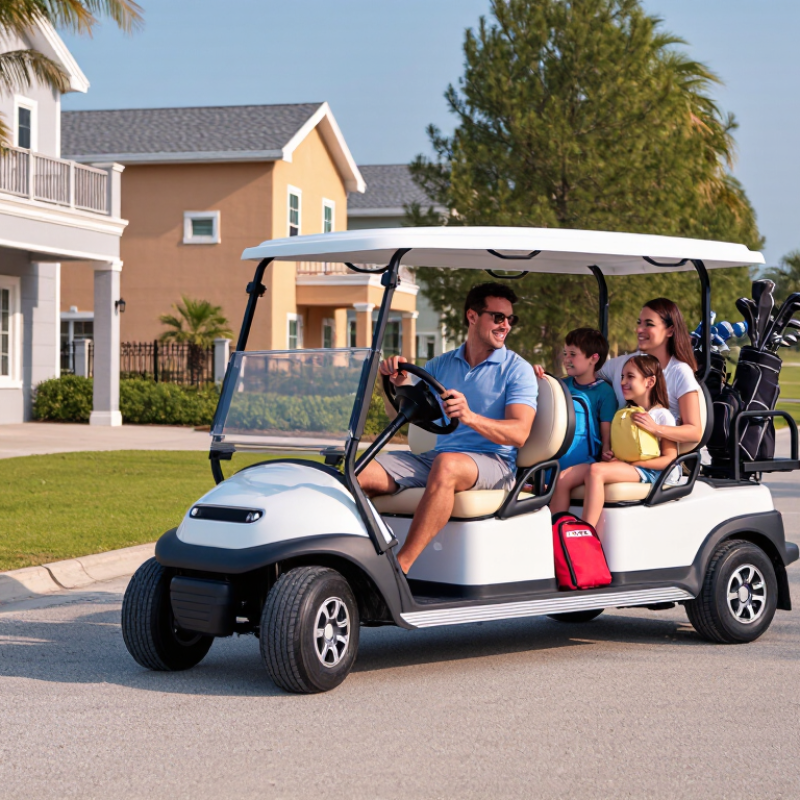
Four-seat electric golf carts have become a familiar sight beyond the golf course. They carry families along quiet neighborhoods, help resort guests reach their rooms, and move small groups between event spaces. One compact vehicle can replace several short car trips. That feels convenient. It can also make shared outings easier, especially when passengers bring beach bags, groceries, or golf clubs.
Their appeal comes down to practical details. Four forward-facing seats make conversation simple, while electric motors offer quiet travel around hotels and communities. Charging overnight can suit regular local use, though range depends on the model, load, terrain, and driving habits. Hills matter. So does the weather. Buyers should check seating comfort, braking, storage, service access, and charging needs rather than choosing by appearance alone.
For transparency, no verified expert quotation was supplied with the source material. The following is an original editorial line, not a real person’s statement: “A four-seater earns its place when it fits the route, the passenger count, and the day’s real errands.” It is attributed here to fictional golf-cart fleet specialist Morgan Hale, created as an illustrative voice—not an independently verified industry expert. That distinction matters. Popularity suggests broad appeal, but it does not prove every household or property needs one. Some owners may find a smaller cart easier to park and maintain. Others value the extra seats every weekend. The best choice is the one that matches actual trips, not an idealized picture of them.
What Defines a Four-Seat Electric Golf Cart?
A four-seat electric golf cart is a compact vehicle powered by a rechargeable battery and designed to carry four people. Its defining feature is a four-person seating layout, not simply a larger body or extra storage space. Seats may face forward in two rows, or the rear pair may face backward. That distinction matters.
The vehicle typically combines an electric motor, battery pack, steering system, brakes, and a sturdy frame. A roof can shade passengers, while a rear bench may fold down to make room for bags or supplies. Details vary. Some carts include seat belts, headlights, turn signals, or a windshield; these features are not universal, so buyers should check the actual equipment. Battery type, charging time, passenger capacity, and range also differ by model and conditions.
Four seats make these carts useful for short trips around golf courses, campgrounds, and large properties. Quiet operation and simple charging appeal to many users. Still, the label can mislead: four seats do not guarantee comfortable space for four adults, especially with bulky bags aboard. Check the seating dimensions, stated load limit, and intended terrain before choosing one. A cart that feels roomy on a smooth path may feel crowded on a longer ride.
Why Are 4-Seater Electric Golf Carts So Popular?
A four-seat layout offers room for a small group while keeping the vehicle smaller than many higher-capacity configurations. The chart compares passenger capacity—not sales or popularity statistics—across common golf-cart seating layouts.
How Seating and Electric Power Shape Its Design
A four-seat electric golf cart is designed around people as much as its motor. The seating plan affects the frame, footwells, handholds, and how easily passengers climb aboard. Forward-facing seats make conversation simple, while rear-facing benches can make boarding less awkward in tight spaces. The trade-off is legroom. A passenger’s knees may sit close to the seat ahead, especially when adults fill every place. Space matters. Cushioned seats and sturdy grab points also help on bumpy paths, though comfort depends on the road and suspension.
Electric power shapes the rest of the layout. A battery pack needs a secure place beneath or behind the seats, where it does not crowd feet or luggage. Its weight can influence handling, particularly with four passengers aboard. Quiet motors make conversation easier, and controlled low-speed response helps when starting on a slope or moving through a crowded course. But extra passengers and hilly routes can reduce practical range; advertised figures cannot predict every trip. A useful design balances seat access, storage, and battery space without making the cart feel bulky. That balance is not perfect. Some layouts prioritize capacity over easy entry, so checking seat spacing and footroom matters before choosing one.
Why Are 4-Seater Electric Golf Carts So Popular? - How Seating and Electric Power Shape Its Design
| Design Factor |
Common 4-Seater Configuration |
How It Shapes the Cart |
Why It Appeals to Users |
| Passenger seating |
Two rows with space for four occupants; the second row may face forward or rearward, depending on the design. |
The extra row increases the vehicle’s overall length and requires room for additional seating and foot space. |
It lets families or small groups travel together instead of using separate carts. |
| Rear-seat versatility |
Some designs offer a rear seat that folds or converts into a utility platform. |
A convertible seat can add cargo-carrying flexibility, though the exact setup varies by model. |
One vehicle can serve passenger and light-hauling needs when its configuration allows. |
| Electric motor |
An electric motor draws power from a rechargeable battery pack; system voltage and motor output vary among carts. |
Battery and motor placement influence packaging, weight distribution, and available cabin or storage space. |
Electric drive produces no tailpipe emissions while operating and is typically quiet at low speeds. |
| Battery choice |
Lead-acid and lithium-ion battery packs are both used in electric golf carts. |
Battery chemistry affects purchase cost, weight, charging requirements, and service life; specifications are model-dependent. |
Buyers can compare options based on budget, expected use, and charging habits. |
| Chassis and handling |
The frame, suspension, brakes, and tires are selected to suit the cart’s intended passenger and load capacity. |
Four seats and a battery pack add weight compared with a smaller two-seat layout, so rated capacity and safe loading matter. |
A purpose-designed chassis helps support everyday passenger use; occupants and cargo should stay within the stated limits. |
| Charging and daily use |
The battery is recharged using a compatible charger and an appropriate power supply. |
Charging time and usable travel distance depend on battery size, battery condition, terrain, load, speed, and driving conditions. |
Routine charging suits repeated local trips, while checking the manufacturer’s specifications helps set realistic expectations. |
| Operating costs and upkeep |
Electric models do not require fuel for propulsion and have fewer routine engine-related service items than gasoline-powered carts. |
Battery care, tires, brakes, steering, and other components still require inspection and maintenance. |
Simple electric operation can be convenient for regular short-distance travel, although total ownership costs vary. |
Note: Features, passenger capacity, battery specifications, charging time, and travel distance vary by model. Always follow the vehicle’s rated capacity and operating instructions.
Where Four-Seat Electric Golf Carts Are Used
Why Are 4-Seater Electric Golf Carts So Popular?
Where Four-Seat Electric Golf Carts Are Used
Four-seat electric golf carts are useful wherever people need to travel short distances at modest speeds. On golf courses, they carry players and equipment between greens without adding much noise. The extra seats also help families or small groups stay together. That matters.
Resorts and campgrounds often use them for guest transport along private paths. Staff can move visitors, towels, or small supply loads between buildings. On large campuses, carts may help facilities teams reach distant classrooms or service areas. They can also support event crews moving equipment across closed grounds.
Routes should be planned carefully, since pedestrians and carts often share space.
In retirement communities and managed residential areas, a four-seater can make nearby errands or social visits easier. Some properties use carts for tours or scheduled shuttles. The electric drive suits frequent, low-speed trips, but actual range depends on terrain, passenger weight, battery condition, and charging habits.
Four seats are handy, yet they can feel cramped with bulky bags. And a cart is not ideal for every route. Operators should check local site rules, passenger limits, and safe paths before use.
What Makes These Carts Popular With Different Users?
A four-seater suits groups that do not move at the same pace. On a golf course, it carries players and bags between holes. At a resort, it can shuttle a family from a cabin to the pool, with towels and a cooler tucked behind the seats. That flexibility matters. The National Golf Foundation’s 2023 participation research counted 26.6 million U.S. on-course golfers and 45 million golf participants when off-course formats were included. Those figures describe a broad recreational audience, not cart buyers specifically, but they help explain why shared, easy transport has appeal beyond traditional golfers.
Different users value different details. Families often want room for children and a stable place to set small bags; resort operators may prioritize moving guests across wide properties without starting a full-size vehicle. In planned communities, four seats can make short trips to a clubhouse or nearby gathering spot easier for neighbors. The appeal is practical, not glamorous. A 4-seater still needs suitable paths, charging access, and enough range for its daily route. Extra passengers also add weight, which can affect performance. That part is easy to overlook. And four seats do not automatically make every ride comfortable: legroom, entry height, and storage vary by design.
What to Consider When Choosing and Owning One?
A four-seat electric cart should be chosen around real trips, not its passenger count alone. Measure the parking space and check the rated payload, including passengers, bags, and child seats. Four seats sound generous. They can feel tight. Ask how far the cart travels on a typical day, then allow for hills, cold weather, and battery aging. Published range figures usually reflect controlled conditions, so treat them as estimates rather than promises.
For street use in the United States, confirm the vehicle’s classification before buying. NHTSA’s Federal Motor Vehicle Safety Standard No. 500 defines a low-speed vehicle as having a top speed above 20 mph and no more than 25 mph, with a gross vehicle weight rating below 3,000 pounds. That benchmark does not make every golf cart street-legal; local requirements vary. Check required safety equipment, braking performance, and where the vehicle may be driven. A quiet motor can make approaching traffic harder to hear.
Ownership details matter, too. Compare battery type, replacement cost, charging time, and the availability of service. Check whether your garage outlet and parking area can support safe charging. Ask how the battery warranty handles capacity loss, not just total failure. A four-seater may carry people comfortably but leave little room for groceries or tools. That trade-off is easy to overlook.
Conclusion
4-Seater Electric Golf Carts combine four-person seating with quiet, battery-powered operation, making them a practical option for short trips and shared transportation. Their layout typically balances passenger space with room for essentials, while electric power supports smooth, convenient travel in places where compact vehicles are useful. These features make the carts suitable for golf courses, residential communities, resorts, campuses, and other settings with frequent local journeys.
Their popularity comes from their versatility: families, visitors, staff, and groups can travel together without needing multiple vehicles. When choosing one, buyers should consider seating comfort, passenger and cargo capacity, battery range, charging needs, terrain, and how often the cart will be used. Regular care of the battery, tires, and other components can also help maintain dependable performance. Overall, a four-seat electric cart offers a comfortable, efficient way to move people over short distances.