Premium Street-Legal Electric Golf Carts · Built In Monroe, Wisconsin
- About
- Models +
- Resource +
- Resources
- Find A Dealer
- Become A Dealer
- Warranty
- Contact

Direct factory supply of certified electric golf carts, utility buggies, and specialized chassis units built with high-tensile steel, cathodic electrodeposition coating, and precision robotic welding.
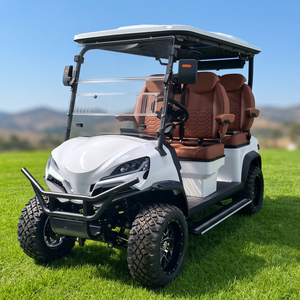
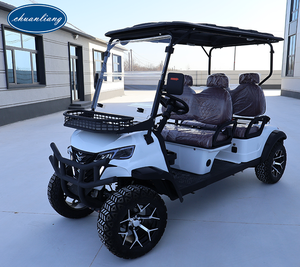
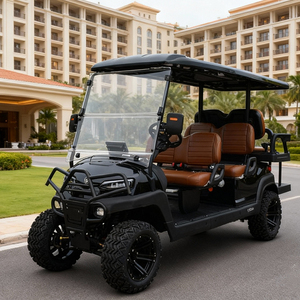
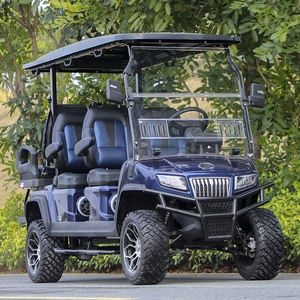
In the rapidly modernizing landscape of Low-Speed Vehicles (LSV), resort passenger carts, commercial turf utility vehicles, and neighborhood electric vehicles (NEVs), the chassis is no longer merely a static ladder frame. It represents the central backbone that dictates payload safety, dynamic vehicle stability, NVH (Noise, Vibration, and Harshness) dampening, and overall battery lifecycle protection. As China's premier cart chassis manufacturer and exporter, our engineering paradigm integrates automotive-grade metallurgy with automated robotic manufacturing to solve the classic trade-offs between structural rigidity, anti-corrosion endurance, and modular flexibility.
Historically, traditional golf carts relied on basic C-channel stamped steel frames assembled via manual spot welding. These legacy designs were prone to torsional flex under asymmetrical loads, severe stress-concentration fractures at suspension mounting points, and rapid corrosion acceleration caused by moisture retention in unsealed structural pockets. Modern commercial fleet operators and OEM brands require platforms capable of sustaining 4-seater, 6-seater, and high-capacity utility loads across diverse terrain—ranging from high-salinity coastal resorts to demanding off-road hunting grounds.
Utilizing hydroformed tubular Q235B and Q345 high-strength carbon steel, our chassis frames feature continuous closed-box sections. Finite Element Analysis (FEA) optimization distributes kinetic energy evenly, minimizing torsional deformation under extreme 4x4 off-road maneuvers.
Every frame undergoes complete immersion electrodeposition coating (CED). This 18-phase process deposits a uniform, corrosion-resistant primer layer inside hollow cross-members, passing 1,000+ hours of continuous salt spray exposure under ASTM B117 standards.
Designed specifically for high-density LiFePO4 (Lithium Iron Phosphate) battery packs (105Ah to 160Ah). The structural tray acts as a stressed chassis member, lowering the vehicle center of gravity (CG) while insulating cells against road impacts.
Dynamic torsional deflection in poorly engineered chassis frames transfers bending moment stress directly into lithium battery enclosures and electronic VCU (Vehicle Control Unit) solder points. By engineering our frames with a minimum torsional stiffness of 2,400 Nm/degree, frame twist is reduced by 64%, effectively protecting internal lithium cell tabs from vibration fatigue and micro-cracking during continuous commercial operation.
To assist global procurement managers, OEM engineers, and fleet distributors in evaluating structural options, the following matrix compares standard industry cart frames against our heavy-duty automotive-grade export platform.
| Performance Benchmark | Legacy Stamped C-Channel | Standard Tubular Steel | Our OEM Export Platform (Q235B/Q345) |
|---|---|---|---|
| Yield Strength (MPa) | 180 - 210 MPa | 235 MPa | 345 - 420 MPa (Enhanced Grade) |
| Welding Precision | Manual Spot (High Variance) | Semi-Automated MIG | Fully Robotic 6-Axis Laser & MIG (±0.1mm) |
| Corrosion Protection | Single-Layer Spray Paint | Powder Coating (Exterior Only) | 18-Phase Cathodic E-Coating + Powder Coating |
| Salt Spray Life (ASTM B117) | < 240 Hours | 480 - 600 Hours | 1,000+ Hours Guaranteed |
| Suspension Mounting Setup | Rigid Leaf Springs Only | Single A-Arm Compatible | Independent Double A-Arm / Multi-Link Ready |
| Battery Enclosure Type | Under-Seat Top-Heavy Tray | Welded Steel Angle Frame | Low-CG Stressed Structural Cell Enclosure |
| Maximum Payload Capacity | 350 kg (770 lbs) | 500 kg (1,100 lbs) | 850 kg (1,870 lbs) Commercial Grade |
The global demand for low-speed vehicles, luxury golf carts, and specialized utility buggies is undergoing a massive transformation driven by urbanization, green resort initiatives, and strict safety regulations in North America, Europe, and the Middle East. Procurement directors must align their supply chains with these structural trends to remain competitive:
Importers no longer want isolated chassis designs for 2-seater, 4-seater, and 6-seater variants. Modern procurement strategies prioritize scalable wheel-base frameworks. Our modular chassis architecture allows dealers to adjust rear chassis extensions while using identical front-end suspension geometries, reducing local spare parts inventory by up to 45%.
Regulatory bodies such as the NHTSA (under FMVSS 500 in the USA) and EU Type Approval authorities (Category L7e) require LSVs to integrate certified seatbelt anchorages, bumper impact zones, and 17-digit VIN mounting plates directly into the main chassis beam. Purchasing non-compliant frames exposes importers to costly customs rejections and liability claims.
The market has shifted away from rough-riding rigid front axles toward MacPherson struts and double wishbone independent front suspensions. Modern chassis design incorporates CNC-machined control arm mounting brackets directly onto the frame rail, offering passenger-car comfort, enhanced steering response, and reduced tire wear on 14-inch radial tires.
Modern electric buggies integrate CAN-Bus communication cables, high-voltage battery lines, 12V lighting harnesses, and hydraulic brake lines. Advanced chassis manufacturing requires internal flame-retardant routing channels engineered into the subframe, preventing wire chafing, water ingress, and short circuits.
Our manufacturing complex represents the pinnacle of Chinese industrial precision. Operating under strict ISO 9001:2015 and IATF 16949 quality management protocols, we serve as the primary OEM/ODM supplier for premier global cart brands, providing end-to-end production scalability from raw tube bending to fully assembled rolling chassis.
Whether you require elevated 4x4 off-road chassis height, customized wheelbase lengths for 8-seater shuttles, or specialized mounting plates for hydraulic dump beds, our R&D engineering team translates 3D CAD/STEP files into prototypes within 14 days.
We optimize container space loading through specialized SKD (Semi-Knocked Down) and CKD (Completely Knocked Down) chassis stacking racks. Our protective anti-corrosion packaging ensures frames arrive free of abrasion or oxidation across long ocean transit voyages.
Every batch undergoes non-destructive ultrasonic weld inspection, coordinate measuring machine (CMM) dimensional verification, dynamic load testing up to 250% rated payload, and salt spray chamber validation prior to factory clearance.
The chassis supports every mechanical component, electronic module, and passenger load. Inferior frames deform under load, leading to misaligned wheel tracks, rapid tire wear, steering instability, frame cracking, and severe damage to expensive LiFePO4 battery enclosures. An automotive-grade chassis ensures a 10+ year operational lifespan with minimal warranty claims.
We utilize an 18-phase Cathodic Electrodeposition (E-Coating) process followed by thermosetting exterior powder coating. Unlike conventional spray paint, E-Coating electrically bonds an anti-corrosion primer to every interior and exterior square millimeter of the metal tubing, providing proven resistance against salt water, high humidity, and chemical fertilizers.
Yes. Our engineering team designs custom modular battery trays with standardized hold-down mounting brackets compatible with both 105Ah and 160Ah LiFePO4 battery modules. The structural layout ensures proper thermal dissipation and low center-of-gravity stability.
Our complete vehicle solutions and chassis assemblies meet key global compliance frameworks including US NHTSA FMVSS 500 Low-Speed Vehicle (LSV) requirements, European Union EEC/CE Category L7e standards, and ISO 9001:2015 manufacturing quality controls.
Initial 3D CAD design and prototype fabrication are typically completed within 14 to 21 days. Once approved, mass production orders ship in approximately 25 to 30 days via optimized SKD/CKD container packaging, maximizing cost efficiency for global dealers and OEMs.