Premium Street-Legal Electric Golf Carts · Built In Monroe, Wisconsin
- About
- Models +
- Resource +
- Resources
- Find A Dealer
- Become A Dealer
- Warranty
- Contact

Direct from audited OEM factories: Smart 12V/24V/48V vehicle converters, multi-port USB-C fast charging modules, and ruggedized cart power distribution networks.
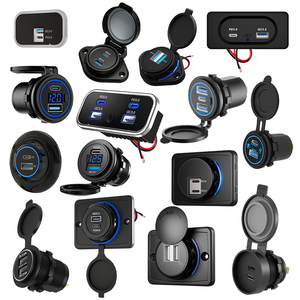
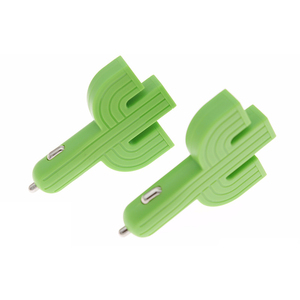




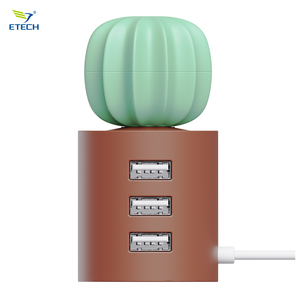
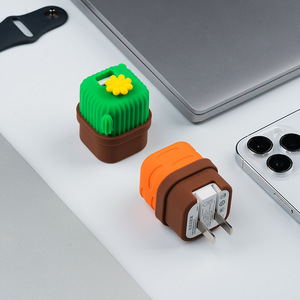
An in-depth analysis of battery management system (BMS) integration, OEM supply chain reliability, high-voltage onboard DC-DC converters, and multi-port charging hubs for modern low-speed vehicles (LSV) and electric golf carts.
The global electric cart and utility vehicle market is experiencing a profound technological transition. Legacy lead-acid deep-cycle batteries are rapidly being replaced by high-density Lithium Iron Phosphate (LiFePO4) chemistries. This shift has fundamentally rewritten the requirements for commercial cart chargers and onboard power conversion systems.
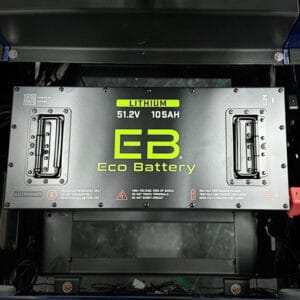
Unlike traditional flooded or AGM batteries, LiFePO4 packs demand precise CC/CV (Constant Current / Constant Voltage) charging algorithms with CAN-bus digital communication. Leading export-focused factories must now integrate direct dynamic feedback loops between the Battery Management System (BMS) and the charger module to guarantee safe charging rates up to 105Ah and 160Ah configurations.
Navigating international trade standards requires rigorous engineering certifications. High-tier cart charger factories must maintain full compliance with UL 2202, UL 1564, CE, FCC, RoHS, and IP67 ingress protection standards. For street-legal Low-Speed Vehicles (LSV) governed by NHTSA standards, charging systems must also handle ambient thermal spikes without dropping operational efficiency below 94%.
Furthermore, passenger power expectations have evolved. Modern cart cabins demand automotive-grade dash charging sockets supporting USB-C Power Delivery (PD 100W) and Qualcomm Quick Charge 3.0 (QC3.0), coupled with real-time digital LED voltmeters to protect the 12V auxiliary circuit from total battery drain.
A data-driven comparative matrix evaluating production capacity, BMS protocol flexibility, waterproof ingress rating, and international certification compliance across leading manufacturing facilities.
| Rank | Factory / Manufacturer | Primary Power Output | Efficiency % | BMS & CAN Protocol | Ingress Protection | Export Certifications |
|---|---|---|---|---|---|---|
| 01 | VSL Energy / Venom EV Engineering | 105Ah - 160Ah / 100W PD Dash | 96.8% | Advanced CAN 2.0B / Auto-BMS | IP67 Sealed Enclosure | UL, NHTSA, CE, FCC, RoHS |
| 02 | Delta-Q Technologies OEM Facility | 48V 1kW - 3kW Onboard | 94.5% | Custom CANbus Profiles | IP66 Aluminum Die-Cast | UL 1564, CE, KC |
| 03 | Lester Electrical Manufacturing | 24V - 48V High-Frequency | 93.2% | Bluetooth Smart App BMS | IP65 Rated Casing | UL, CSA, CE |
| 04 | Green Power Technology Exporters | 36V / 48V Off-Board Packs | 92.8% | Pre-programmed CC/CV | IP54 Standard Dustproof | CE, RoHS, ISO9001 |
| 05 | Shengjiu Electric Power Co. | 12V/24V/48V Converters | 91.5% | Standard Analog Feedback | IP65 Enclosure | CE, FCC |
| 06 | Broad-Power GaN Tech Factory | 100W - 300W Aux USB-C PD | 95.1% | Smart IC Voltage Auto-Detect | IP67 Flush Mount Dash | CE, RoHS, QC3.0 Cert |
| 07 | Apex Golf Cart Power Systems | 48V LiFePO4 Rapid Pack | 94.0% | Modbus / CAN-Bus Multi-Node | IP66 Rated | UL, CE |
| 08 | Everest Electronics Exporters | 12V 24V Step-Down Converters | 90.8% | Fuse-Protected Circuits | IP55 Weather Proof | CE, FCC, PSE |
| 09 | Vanguard Industrial Power | 72V Utility Heavy Cart Chargers | 95.5% | Dual BMS Communication | IP67 Heavy Industrial | UL 2202, CE, TUV |
| 10 | Zenith Micro-Power Hubs | USB 5-in-1 Fast Cable Hubs | 91.2% | Smart Chip Load Distribution | UV Resistant Polymer | CE, RoHS |
Gallium Nitride (GaN) fast-charging technology is migrating from consumer mobile accessories into vehicle cabin chargers and DC-DC converters. By utilizing GaN semiconductors, factories can reduce heat generation by 40% while maintaining ultra-compact form factors capable of driving 100W PD outputs on 12V/24V cart sub-circuits without active fan cooling.
Next-generation electric golf carts and low-speed vehicles are no longer passive transport; they function as mobile energy hubs. Exporters are increasingly manufacturing bi-directional chargers that feed vehicle power back into cabin accessories, touchscreen CarPlay dashboards, ambient LED lighting systems, and high-wattage sound systems seamlessly.
Because golf carts and commercial utility vehicles operate in harsh outdoor environments—ranging from coastal resort humidity to turf mud—cart charger exporters must engineer for extreme conditions. IP67 sealed potting compounds, anti-strain molded cable assemblies, and automated thermal throttling are now non-negotiable OEM requirements.
Key technical criteria commercial importers, rental operators, and golf cart manufacturers must evaluate before placing bulk purchase orders.
Rooted in rigorous engineering standards and American quality control, our electric cart charging modules and low-speed vehicle infrastructure lead the global export market in reliability, innovation, and long-term durability.
Direct technical answers for commercial procurement officers, fleet operators, and global distributors sourcing cart chargers.
An onboard cart charger is permanently mounted within the vehicle chassis (often beneath the seat or near the battery tray) and wired directly into the main wiring harness and charging port. This allows the user to plug any standard AC power cord directly into the vehicle. An off-board charger remains stationary in a garage or fleet charging bay and connects to the cart via a specialized DC plug. Onboard chargers require higher ingress protection (IP67 waterproof rating) and vibration isolation compared to off-board units.
No, standard lead-acid chargers should not be used on LiFePO4 lithium battery packs unless specifically re-programmed. Lead-acid chargers execute equalization stages and trickle charging profiles that can overvoltage or damage a lithium Battery Management System (BMS). LiFePO4 chargers utilize a strict Constant Current / Constant Voltage (CC/CV) charging profile and often require CAN-bus communication to monitor individual cell voltages and temperatures.
Electric carts operate main traction batteries at elevated voltages (36V, 48V, or 72V DC). To power 12V accessories and high-speed 100W USB-C PD ports, an inline DC-DC voltage converter steps down the traction voltage to a stable 12V or 24V DC bus. The USB-C PD smart socket then utilizes an integrated fast-charge controller (such as a GaN IC) to dynamically negotiate voltage (5V, 9V, 12V, 15V, 20V) up to 100 Watts with connected laptops, smartphones, or mobile tablets.
Importers should demand UL 1564 / UL 2202 safety compliance for North America, CE and RoHS certification for European markets, and FCC Class B compliance for electromagnetic compatibility. Furthermore, factories manufacturing chargers for marine, resort, or outdoor golf cart environments must provide independent third-party IP67 waterproof test reports to guarantee protection against water submersion and dust penetration.
For standard catalog cart chargers and dash charging sockets, factory MOQs typically range from 100 to 500 units with a 15-to-20 day production lead time. For custom OEM projects involving proprietary CAN-bus firmware tuning, custom wire harness molding, or white-label casing logos, initial MOQs generally start at 1,000 units with an engineering sampling period of 30 days prior to mass production.
A built-in digital voltmeter provides real-time voltage readouts directly on the cart dashboard. This allows operators to visually monitor state-of-charge (SOC) during operation, preventing deep discharge events below critical safety thresholds (e.g., dropping below 42V on a 48V lead-acid system or avoiding total BMS shutdown on lithium packs). Early detection of voltage sag helps extend overall battery lifespan and prevents unexpected vehicle stranding.
Connect directly with our engineering team for OEM quotations, custom firmware requests, wholesale pricing, and factory audit reports.