Premium Street-Legal Electric Golf Carts · Built In Monroe, Wisconsin
- About
- Models +
- Resource +
- Resources
- Find A Dealer
- Become A Dealer
- Warranty
- Contact

Select from our top-tier electric buggies and utility platforms equipped with factory-fitted premium leather seating assemblies and custom upholstery configurations.
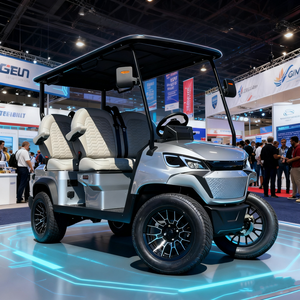
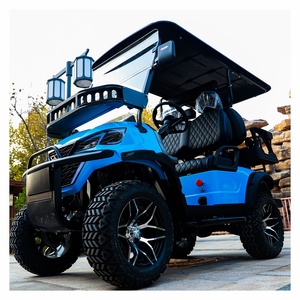
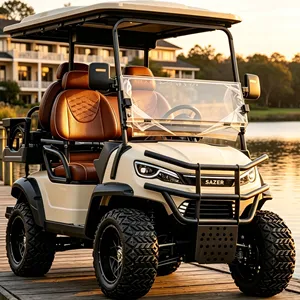
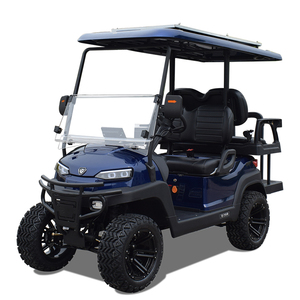
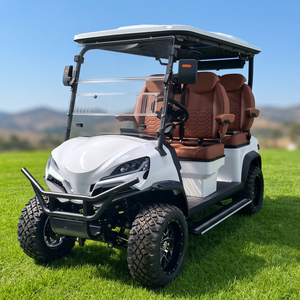
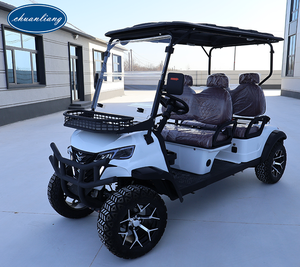
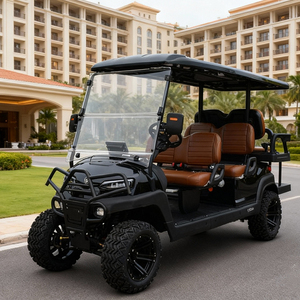
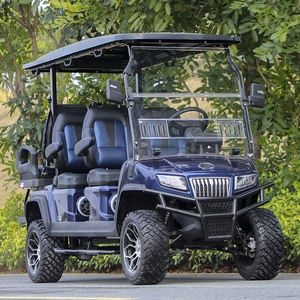
The global demand for high-performance leather seating in commercial electric vehicles (EVs), luxury low-speed vehicles (LSVs), resort golf buggies, and specialized mobility fleets has underwent a structural shift. Procurement officers and B2B dealers no longer treat seating as a cosmetic trim item. Modern vehicular seating is an intricate subsystem that impacts passenger safety, vehicle thermal dynamics, long-term brand equity, and ergonomic satisfaction. Selecting a certified leather seats factory & supplier requires evaluating raw material formulations, foam resilience coefficients, weatherproofing treatments, and automated manufacturing compliance.
Unlike standard indoor automotive leather, seating engineered for open-air buggies, utility vehicles, and heavy-use resort transports must withstand intense UV exposure, extreme humidity, salt spray, and continuous mechanical friction. Top-tier manufacturers utilize advanced synthetic leather derivatives—specifically micro-fiber reinforced polyurethane (PU) and marine-grade polyvinyl chloride (PVC) coated fabrics—that outperform natural leather in tensile durability and moisture resistance while retaining a genuine, supple tactile feel.
Formulated with specialized anti-microbial biocide additives and UV stabilizers. Impermeable to moisture penetration, resisting fungal growth and sun-bleaching up to 1,200 hours under xenon arc exposure tests.
Employs a 3D structural matrix mimicking natural leather collagen fibers. Delivers superior tear strength (>80N), breathability, and cold-crack resistance down to -30°C for extreme winter operations.
High-resilience (HR) polyurethane foam molded at 55-65 kg/m³ density. Prevents premature sagging, ensuring ergonomic lumbar support over 100,000 continuous compression cycles.
To assist fleet managers, commercial buyers, and OEM vehicle integrators in auditing seating suppliers, the table below delineates the essential material benchmarks required for long-lifecycle vehicular applications:
| Evaluation Parameter | Standard Commercial Grade | Premium Automotive Marine Leather | Venom EV OEM Specification |
|---|---|---|---|
| Base Material Structure | Woven Polyester + Standard PVC Coating | Ultra-Fine Microfiber Non-Woven Substrate | High-Tensile Microfiber PU / Marine Vinyl Matrix |
| Abrasion Resistance (Martindale) | 25,000 – 40,000 Cycles | 60,000 – 80,000 Cycles | > 100,000 Cycles (Heavy Commercial Class) |
| UV Degradation Resistance | 300 Hours (QUV Exposure) | 600 – 800 Hours | 1,000+ Hours (ISO 105-B02 Grade 7+) |
| Flame Retardancy Certification | FMVSS 302 Pass | FMVSS 302 + CAL 117 | CAL 117 / FMVSS 302 / EN 1021-1/2 |
| Seam Strength & Tensile Load | < 350 N / 5cm | 450 N – 600 N / 5cm | > 750 N / 5cm (Reinforced Double Stitch) |
| Hydrolysis Resistance (Jungle Test) | 2 Weeks (Tropical Chamber) | 5 Weeks | 7 Years Hydrolysis Guarantee |
The commercial procurement landscape for automotive and utility vehicle seating is rapidly evolving driven by sustainability mandates, smart vehicle technology integration, and personalized dealer branding. Commercial buyers who align their supply chain with these upcoming trends will establish a decisive market advantage:
Environmental regulations in North America and Europe are driving the adoption of bio-based polyols derived from castor oil, recycled ocean plastics, and solvent-free waterborne PU leathers. Future fleet procurement will require carbon-neutral verification and low-VOC emission certificates (ISO 16000 compliance) to meet corporate ESG metrics.
Next-generation leather seating options are moving beyond basic cushioning to incorporate embedded thermoelectric heating grids, forced-air ventilation channels, and phase-change materials (PCM). These features optimize battery consumption in electric buggies by delivering direct thermal comfort to passengers rather than conditioning the ambient open air.
High-frequency commercial fleets (golf courses, resort shuttles, airport transports) are prioritizing seating assemblies with modular, tool-free quick-release cushion cores. This allows fleet managers to replace damaged leather covers or alter seating configurations (e.g., converting passenger seats to flat cargo decks) in under 60 seconds per vehicle.
Modern leather seat factories are deploying automated precision manufacturing techniques that significantly reduce production tolerances while expanding customization capabilities. Key product development vectors include:
Traditional hand-cutting of leather upholstery introduces human variability in stretch and fitment. Advanced suppliers utilize multi-ply CNC oscillating knife cutters guided by digital CAD templates. Computerized double-needle lockstitch sewing machines maintain consistent thread tension (±0.2 N) and millimeter-precise diamond quilting patterns, eliminating seam puckering and premature thread degradation under load.
Rather than gluing flat leather covers over block-cut foam, leading factories utilize direct vacuum-assisted in-mold upholstery. The leather skin is thermoformed directly onto the foam mold cavity, creating a permanent chemical bond. This technique eliminates air pockets, prevents cover slippage during lateral g-force maneuvers, and enables aggressive side bolster contours for off-road 4x4 hunting buggies.
With vehicle customization moving from a niche aftermarket segment to a core dealer profit center, suppliers offer dynamic color-matching pipelines. Factory upholstery lines can match leather vinyl formulations to exact automotive paint codes (Pantone/RAL), incorporating contrasting accent piping, 3D hot-stamped branding logos, and custom diamond embroidery tailored for regional dealership networks.
Reflecting the rigorous quality controls proven by industry leaders like Venom EV, our manufacturing ecosystem combines heavy-duty industrial output with customized dealer-level agility. We provide end-to-end support for global distributors, fleet operators, and low-speed vehicle manufacturers:
Every seating system is engineered to integrate seamlessly with 3-point harness seat belts, adjustable headrests, and reinforced mounting brackets compliant with Federal Motor Vehicle Safety Standards for Low-Speed Vehicles (LSVs).
With specialized distribution logistics and localized support frameworks modeled after North American operations (Monroe, WI standards), we deliver completely assembled seating units or flat-pack OEM replacement kits with minimal lead times.
From initial 3D surface scanning of vehicle chassis to rapid 72-hour CAD cushion rendering and physical sample production, our engineering team works directly with your product developers to realize custom seat designs.
Clear, direct answers regarding minimum order quantities, compliance certifications, material longevity, and OEM customization procedures:
Access our complete 2025 OEM/ODM product catalog, technical material datasheets, and factory wholesale pricing structure.