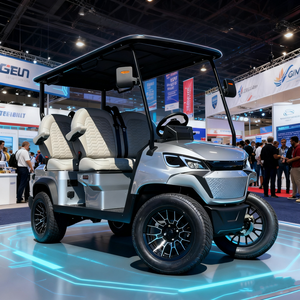
72V AC Vector
5KW / 7.5KW
EEC Certified

Explore state-of-the-art low-speed electric vehicles (LSVs) and commercial buggies powered by China's top-tier AC/PMSM motor controllers, ultra-reliable LiFePO4 power packs, and heavy-duty chassis engineering.
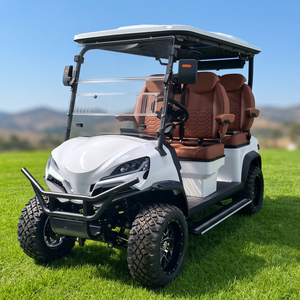
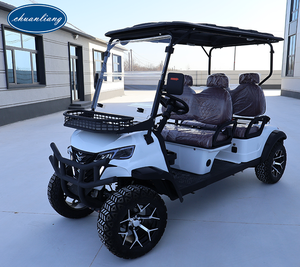
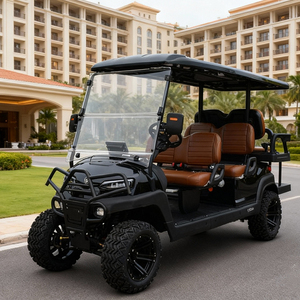
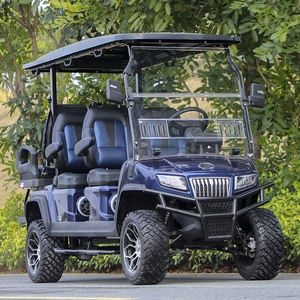
The global transition toward light electric vehicles (LEVs), low-speed vehicles (LSVs), and commercial utility buggies has repositioned China as the undisputed hub for motor controller innovation and drive system manufacturing. As power electronics transition from conventional DC series motor architectures toward high-efficiency AC Induction and Permanent Magnet Synchronous Motor (PMSM) systems, procurement teams must look beyond surface specifications to evaluate Field-Oriented Control (FOC) algorithms, dynamic heat dissipation capability, CAN-bus software interoperability, and long-term functional safety compliance (ISO 26262).
A motor controller acts as the central nervous system of any electric vehicle, modulating energy flow from the DC power pack (typically 48V, 60V, or 72V LiFePO4 chemical architectures) into precisely timed 3-phase AC voltage pulses. Top-tier Chinese manufacturers have moved away from basic scalar (V/Hz) control methods in favor of high-performance vector control algorithms that yield sub-millisecond dynamic torque response, smooth low-speed starting torque, and regenerative energy recovery efficiencies approaching 20% under urban stop-and-go driving profiles.
When evaluating China's leading motor controller suppliers for OEM/ODM vehicle assembly or fleet upgrade contracts, four engineering pillars define world-class drive systems:
Decouples direct axis (d-axis) magnetizing current from quadrature axis (q-axis) torque-producing current. This enables constant torque operation at lower RPMs and field-weakening algorithms for elevated top speeds without overheating the stator windings.
State-of-the-art 72V controllers incorporate ultra-low Rds(on) power MOSFETs or wide-bandgap SiC semiconductors, reducing switching power losses by up to 40% while operating seamlessly at elevated switching frequencies (16kHz–20kHz) to suppress audible motor whine.
Enclosed in precision die-cast aluminum heat-sink housings with silicone gel potting, ensuring immunity to high-pressure washdowns, salt spray corrosion, off-road vibration shock, and extreme thermal cycling from -40°C to +85°C ambient temperatures.
Use this technical evaluation matrix to align motor controller system choices with specific vehicle payload requirements, environmental conditions, and speed profiles.
| Controller Topology | Voltage Range | Peak Current (A) | Efficiency Rate | Protection Rating | Ideal Application Scenario |
|---|---|---|---|---|---|
| 48V AC Induction FOC Controller | 36V – 52V DC | 300A – 450A | 95.2% | IP65 / IP67 | Standard 2-Seater & 4-Seater Golf Course Buggies |
| 72V PMSM Vector Inverter | 60V – 88V DC | 450A – 600A | 98.6% | IP67 Sealed | Lifted Street-Legal LSVs, 6-Seater Resort Transporters |
| Dual-Motor 4x4 Controller Module | 72V Nominal | 350A x 2 Dual Outputs | 97.8% | IP67 Ruggedized | Off-Road Hunting Carts & Heavy Utility Vehicles |
| Commercial Fleet Telematics Controller | 48V – 72V Universal | 400A – 550A | 97.1% | IP67 Enclosed | Shared Resort Fleets, Campus Shuttle Platforms with Remote OTA |
As international regulatory frameworks for Low-Speed Electric Vehicles (such as US NHTSA FMVSS 500 standards and European L7e/EEC certifications) enforce stricter safety, roadworthiness, and energy performance metrics, procurement executives must anticipate structural technological shifts in supply chain offerings. Sourcing managers working with OEM partners in China should prioritize manufacturers investing in the following four market-defining vectors:
Transitioning from traditional 48V setups to higher nominal 72V system voltages decreases overall system current draw for equivalent wattage output. This reduces power dissipation across the wiring harness ($I^2R$ heat losses), allowing thinner gauge copper cables, lower component operating temperatures, and enhanced overall drive efficiency.
Leading Chinese manufacturers are bundling the motor controller, AC motor, and reduction transaxle into a single hermetically sealed unit. These compact 3-in-1 electric drive axles eliminate external phase wiring, reduce EMI/RFI noise emissions, simplify assembly lines, and minimize failure points for vehicle builders.
Modern drive controllers now serve as intelligent IoT hubs. Utilizing CANopen or custom J1939 communication protocols, motor controllers link directly to smart touchscreen dashboards (featuring Apple CarPlay/Android Auto), BMS state-of-charge monitors, diagnostic tools, and cloud fleet telematics for over-the-air (OTA) firmware tuning.
Advanced torque-vectoring controllers modulate energy recovery dynamically based on real-time slope sensors, pedal position rate of change, and battery SOC protection limits. This offers downhill speed control without mechanical brake fade while recapturing kinetic energy safely back into LiFePO4 cells.
Combining North American product engineering standards (such as Venom EV's Wisconsin design and testing facilities) with China's world-class high-volume power electronics manufacturing ecosystem yields unparalleled cost-to-performance advantages for global dealers, resort operators, and vehicle assemblers.
Automated Surface Mount Technology (SMT) production lines ensure microscopic precision during component placement, while high-vacuum automatic potting processes eliminate air voids around PCB power stages to maximize thermal conductivity and vibration resilience.
Every controller unit undergoes rigorous automated EOL testing prior to shipment: thermal stress chamber cycling, full-load dyno torque validation, high-voltage breakdown insulation checks, and CAN-bus protocol verification.
Full compliance with international standards, including CE certification, ISO 9001 quality control management systems, DOT equipment suitability for low-speed street legality, and EEC certification for European road distribution.
Furthermore, our factory-direct OEM and ODM customization capabilities allow global partners to order tailored throttle response curves, custom branding on controller housings, specialized wiring harness connector heads, and turnkey integration with 105Ah–160Ah Eco Battery LiFePO4 packs featuring 8-year warranties.
Find detailed engineering answers regarding motor controller sourcing, system customization, vehicle integration, and international shipping standards.
AC Induction controllers drive robust motors with no permanent magnets, making them highly durable and cost-effective for standard course rental fleets. PMSM (Permanent Magnet Synchronous Motor) controllers require precision Field-Oriented Control (FOC) but deliver 10%–15% higher energy efficiency, greater power density, superior acceleration, and minimal motor heating—making them the ideal selection for premium 72V street-legal lifted vehicles and heavy 6-seater passenger buggies.
Yes. Leading manufacturers offer full CAN-bus customization (including CANopen, J1939, or custom proprietary baud rates). Our engineering team can configure controller software to transmit real-time telemetry—such as RPM, controller temperature, phase current, error diagnostic codes, and battery state-of-charge—directly to smart digital touchscreens (with Apple CarPlay support) or third-party fleet tracking modules.
Advanced AC/PMSM vector controllers continuously monitor motor rotor speed and back-EMF voltage. When the operator releases the accelerator on a downhill slope, the controller seamlessly transitions the inverter power stage into a generator topology. This creates controlled electromagnetic braking torque to maintain safe descent speeds without relying solely on mechanical disc brakes, while feeding smooth charging current back into the lithium battery pack.
We strongly recommend an IP67 rating for all motor controller assemblies. IP67 enclosures feature fully sealed aluminum heat sinks and internal potting compounds, ensuring complete protection against dust ingress and immersion in water up to 1 meter deep—vital for off-road 4x4 hunting carts, coastal resort vehicles exposed to humidity, and turf maintenance fleets subjected to power washing.
Absolutely. All our 48V and 72V motor controller series are natively optimized for lithium iron phosphate (LiFePO4) battery chemistry, such as standard 105Ah or high-capacity 160Ah packs. Controller voltage cut-off thresholds, current draw surges, and regenerative charging parameters are specifically tuned to align with BMS protection limits, preventing accidental battery shutdown under high load.
Standard production lead times for customized OEM/ODM vehicle controllers or full vehicle powertrains range from 15 to 30 days depending on protocol matching requirements. Drive controllers and lithium power system components are backed by comprehensive multi-year factory warranties (up to 8 years on integrated Eco Battery packs) with direct engineering support and spare component availability.
Connect directly with our technical support team to request detailed spec sheets, custom CAN protocol mapping, sample evaluation units, or bulk dealer volume pricing.